
Best Wood Types for Custom Cabinets in Missouri Homes
Best Wood Types for Custom Cabinets in Missouri Homes
- Evan
One of the biggest decisions homeowners make during a cabinetry project has nothing to do with layout.
It is the wood itself.
And honestly, this is usually the point where people realize custom cabinetry is more detailed than they expected.
At first, most homeowners think they are just choosing a color.
Then they start learning that different woods affect:
Appearance
Durability
Texture
Maintenance
Cost
Even how the finish absorbs stain or paint
That is why material selection matters so much.
The wood you choose completely changes the feel of the kitchen.
A white oak kitchen feels very different from walnut. Painted maple feels completely different from stained alder.
And around Kansas City and Weston, homeowners are paying much closer attention to material quality than they were even a few years ago.
People want kitchens that feel warm, functional, and built specifically for their home instead of something generic.
Let’s walk through the wood types homeowners ask about most often and what actually makes sense depending on the project.
The Quick Answer Most Homeowners Are Looking For
There is no single “best” wood for custom cabinets.
The right choice depends on:
Your style
Your budget
Whether you want paint or stain
How much natural grain you want visible
Long term maintenance expectations
That said, some woods have definitely become more popular than others in Missouri homes recently.
Especially white oak.
Why Wood Choice Matters More in Custom Cabinetry
With stock cabinets, material options are usually limited.
With custom cabinets, homeowners have much more control over:
Grain appearance
Texture
Finish quality
Durability
Overall style
That flexibility is one of the biggest reasons people choose custom cabinetry in the first place.
The material becomes part of the design instead of just the structure underneath it.
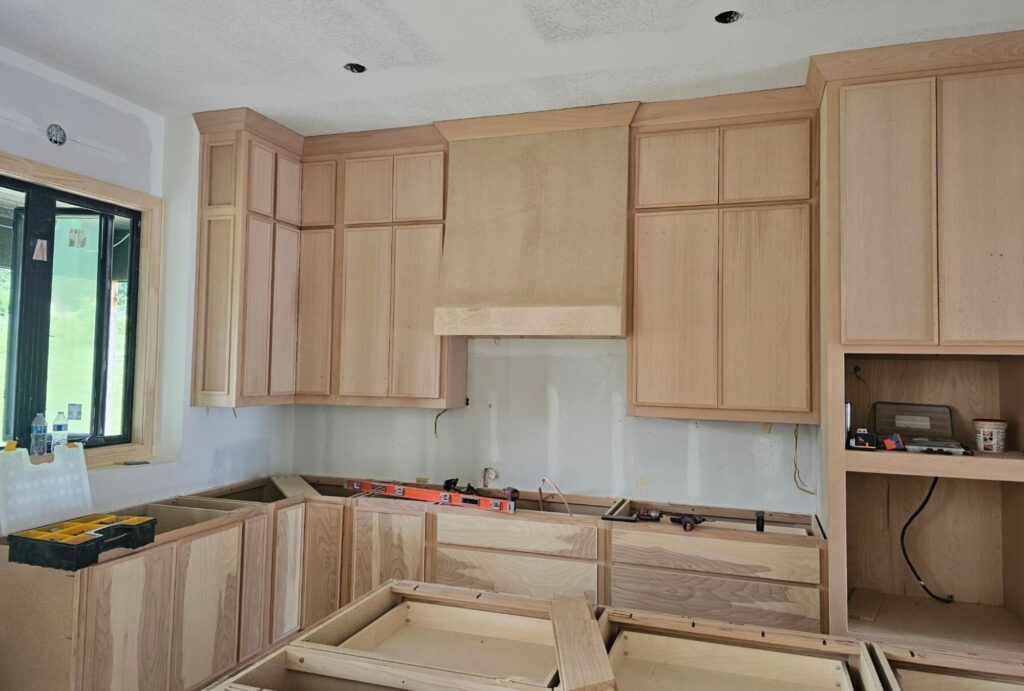
Durability and Everyday Wear
Most cabinet woods are durable enough for everyday use when built correctly.
But some woods handle wear differently over time.
White oak is extremely durable and tends to age well.
Maple is also strong and reliable.
Walnut is durable too, though darker woods sometimes show scratches differently depending on finish and lighting.
The bigger factor is usually craftsmanship and finish quality, not just the wood itself.
Poor finishing work causes more long term issues than wood species alone.
Walnut Cabinets
Walnut is usually considered more of a premium cabinet material. It has a much darker, richer appearance and creates a dramatic look immediately. Walnut works especially well in: Luxury kitchens Statement islands Modern designs High contrast spaces The grain patterns are beautiful, and no two walnut kitchens ever really look exactly the same. The tradeoff is cost. Walnut is typically more expensive than many other cabinet woods, which is why some homeowners use it selectively instead of throughout the entire kitchen. For example: Walnut island with painted perimeter cabinets Walnut floating shelves Walnut accent cabinetry That combination has become very popular lately.
Maple Cabinets
Maple has been a staple in cabinetry for a long time. One reason homeowners still choose maple is because it works extremely well for painted cabinets. It has a smoother grain pattern compared to woods like oak, which creates a cleaner painted finish. Maple is often used when homeowners want: White kitchens Soft neutral cabinet colors Cleaner transitional designs Smooth painted finishes It is also durable and versatile, which keeps it popular across many different home styles.
Paint Grade Cabinets
A lot of homeowners hear “paint grade” and assume it means lower quality. That is not necessarily true. Paint grade materials are specifically chosen because they produce smoother painted finishes. If someone wants: Bright white cabinets Cream cabinets Soft gray cabinetry Modern painted finishes paint grade cabinetry is often the better option. The focus is less on showcasing wood grain and more on achieving a clean, consistent finish. This has become extremely common in kitchen remodels throughout Missouri over the last several years.
Custom Cabinets
How Different Woods Affect Cabinet Appearance This is where homeowners usually start noticing major differences. Some woods have: Heavy grain movement More texture Knots and character Strong color variation Others look smoother and more uniform. For example: White oak shows more visible grain Walnut creates richer color variation Maple looks smoother and cleaner under paint There is not really a wrong choice. It depends on the overall feel you want your kitchen to have.
White Oak Cabinets
White oak has easily become one of the most requested cabinet materials around the Kansas City area. And honestly, once you see it in person, it makes sense why. White oak gives kitchens a clean, modern feel without looking cold or overly trendy. It has: Natural warmth Visible grain texture Strong durability A timeless look that works in both modern and traditional homes A lot of homeowners like it because it feels high end without looking overly flashy. It also works well with lighter finishes that are extremely popular right now. Especially in homes trying to balance modern design with a warmer, more lived in feel.
Moisture and Missouri Weather
This is something homeowners do not always think about.
Missouri weather changes constantly.
Humidity swings, seasonal temperature changes, and moisture levels can all affect wood movement over time.
That is one reason proper cabinet construction matters so much.
Well built custom cabinets are designed to handle natural wood movement better than lower quality mass produced options.
This is especially important in kitchens where heat and humidity fluctuate regularly.
Painted vs Natural Wood Cabinets
This is one of the biggest style decisions homeowners face.
Painted cabinets tend to create:
Brighter spaces
Cleaner looks
More transitional or modern styles
Natural wood cabinets usually create:
More warmth
More texture
More visual depth
A more organic feel
Neither one is necessarily better.
It depends on:
Lighting
Home style
Personal preference
Long term design goals
Right now, many homeowners are combining both.
For example:
Painted perimeter cabinets with a wood island
White oak lowers with painted uppers
Walnut accents mixed into lighter kitchens
That layered look has become very popular.
Real Situation We See Often
A homeowner originally planned on doing fully painted cabinets because that was what they kept seeing online.
But after viewing material samples in person, they realized they wanted more warmth and texture in the kitchen.
They ended up choosing white oak instead.
Once the cabinets were installed, the entire space felt softer, warmer, and much more natural.
That is something photos online do not always communicate well.
Wood feels different in person.
Cost Differences Between Wood Types
Material selection also affects pricing.
Generally speaking:
Paint grade materials are often more budget friendly
Maple sits in the middle range
White oak usually costs more
Walnut tends to be one of the higher end options
But pricing also depends on:
Availability
Finish choice
Project size
Construction details
That is why accurate estimates matter so much.
If you want a deeper breakdown on pricing factors, this guide helps explain more:
Custom Cabinet Cost Guide
How to Choose the Right Wood for Your Home
The best approach is usually thinking about:
Your overall home style
How much texture you want
Whether you prefer paint or stain
Your long term goals for the space
It also helps to see materials in person.
Lighting changes everything.
A wood sample that looks one way online can feel completely different inside your actual kitchen.
Remodeling Trends in Kitchen Design
Natural materials have become much more popular in recent years.
Homeowners are moving away from kitchens that feel overly sterile or flat.
The National Association of Home Builders shares remodeling and design trend insights here.
That resource helps homeowners understand broader kitchen and remodeling trends shaping modern cabinetry design.
FAQs About Cabinet Wood Types
What is the most popular wood for cabinets right now?
White oak has become one of the most requested options in many Missouri kitchens.
Is walnut worth the higher price?
For homeowners wanting a richer, more dramatic look, many feel it absolutely is.
Are painted cabinets going out of style?
Not at all. Painted cabinets remain extremely popular, especially in transitional kitchens.
Which wood is best for painted cabinets?
Maple and paint grade materials are often preferred because of their smoother grain patterns.
Final Thoughts
If you are choosing custom cabinets in Weston or the Kansas City area, the wood you choose affects far more than just appearance.
It changes the feel of the entire kitchen.
Some homeowners want clean painted finishes.
Others want warmth, grain texture, and natural character.
The right material depends on your home, your style, and how you want the space to feel years from now.
And honestly, once homeowners start seeing these materials in person, the right choice usually becomes much clearer.
Ready to Take the Next Step
If you are planning a kitchen, bathroom, or cabinetry project, it helps to explore material options before making final design decisions.
You can learn more about:
Custom Kitchen Cabinetry
Bathroom Cabinetry
Cabinetry and Storage Solutions
Or schedule a consultation to compare wood types and finishes for your home.